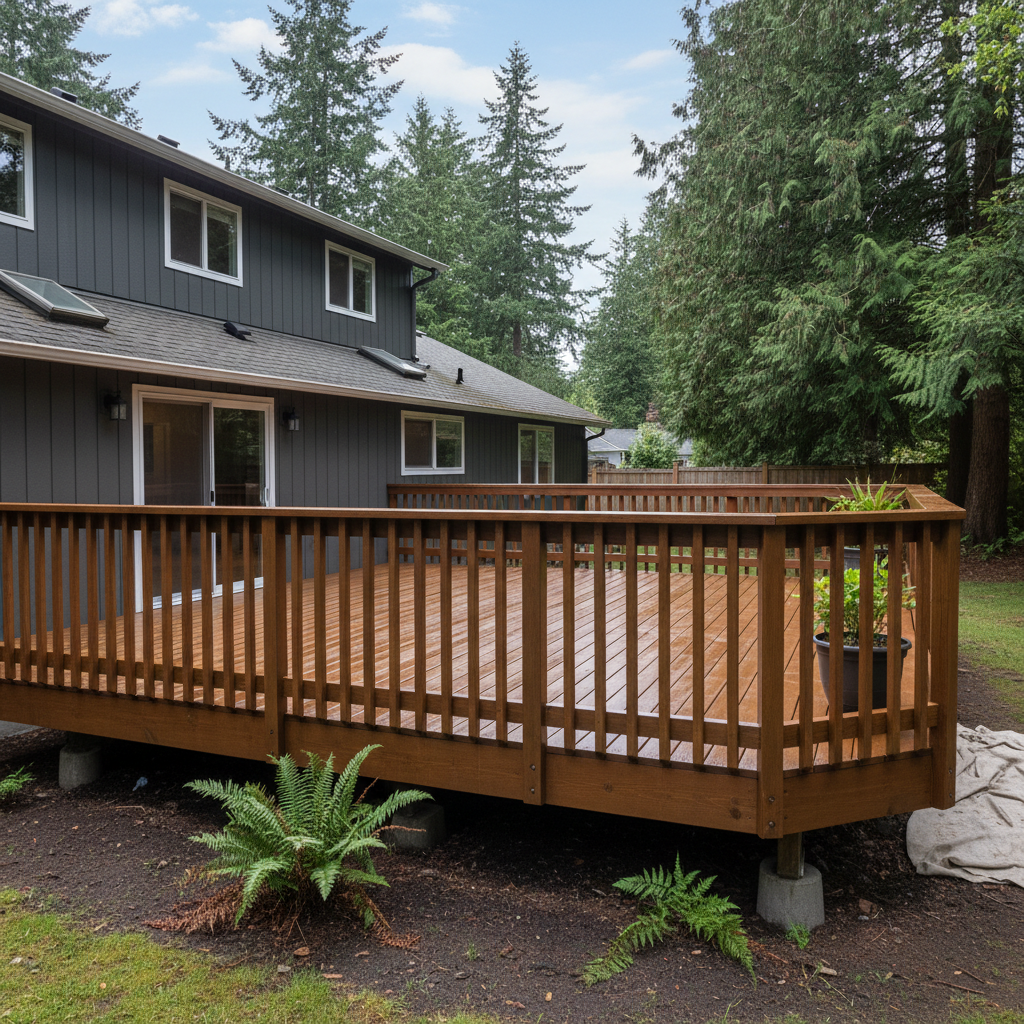
Got a deck, do you? Maybe it's looking a little gray, faded, or just plain sad. So you decide it's time to stain it. Smart move. A well-stained deck not only looks fantastic but also protects your investment from all that Burien rain and sun we get. But I've seen too many folks — both the DIY crowd and those who hire it out — make some pretty basic mistakes. And those mistakes? They end up costing more time, more money, and a whole lot of headaches down the road. Let's talk about how to avoid them.
Mistake #1: Skipping the Prep Work (or doing it wrong)
This one's probably the biggest. You wouldn't paint a dirty wall, would you? The same goes for your deck. You absolutely, positively have to clean it thoroughly first. And I mean thoroughly. Just hosing it down? That's not going to cut it.
- Not cleaning properly: You'll need a good deck cleaner, maybe even a brightener, and a pressure washer. But be careful with that pressure washer! Too much pressure, or holding it too close, and you'll gouge the wood. I've actually seen decks that look like they've been attacked by a weed whacker because someone got too aggressive. Your goal is to clean off all the old stain, mildew, dirt, and those graying wood fibers.
- Not letting it dry: After cleaning, your deck needs to dry completely. And I mean completely. Here in Burien, with our maritime climate, that can easily take a few days, even if it looks dry on top. If you stain over damp wood, that stain isn't going to stick right. You'll end up with peeling and bubbling issues way sooner than you should. Trust me, waiting an extra day or two is totally worth it.
- Not sanding: If your deck has any fuzzy spots from pressure washing, or if the old stain feels really rough, a light sanding will make a huge difference in how the new stain looks and how long it lasts. It's extra work, sure, but it creates a smooth surface for the stain to penetrate evenly.
Mistake #2: Choosing the Wrong Stain Type
Walk into any hardware store, and the options for deck stain can be pretty overwhelming. Transparent, semi-transparent, solid, oil-based, water-based... it's a lot to take in. Picking the wrong one for your particular situation is a really common error.
- Not matching the existing stain: If you're just doing a maintenance coat, you really need to know what's already on there. You generally can't put a water-based stain over an oil-based one without a ton of extra prep, and vice-versa. If you don't know, you might have to strip it all off, which is a whole other project in itself.
- Going too opaque too soon: If your deck is in good shape and you like seeing the wood grain, start with a transparent or semi-transparent stain. If you go straight to a solid stain, you're basically painting it, and while solid stains offer more UV protection and hide imperfections, they also tend to peel more easily than penetrative stains. You can always go from transparent to solid, but you can't easily go from solid back to transparent.
- Ignoring the wood type: Different woods take stain differently, you know? Cedar, which is common in many older Burien homes, is quite porous. Pressure-treated lumber is also pretty common. Just make sure the stain you pick is suitable for your deck's material.
Mistake #3: Hiring the Cheapest Bid (Without Asking the Right Questions)
Look, I get it. Everyone wants to save a buck. But when it comes to deck staining, the cheapest bid often means corners are being cut. And those cut corners? They'll definitely come back to haunt you.
- No proper insurance: This is a huge red flag. If a contractor isn't insured, and someone gets hurt on your property or they damage something, you could be liable. Always ask for proof of liability and workers' comp insurance.
- No clear process: A good contractor, like us at Classic Painting Solutions, will walk you through their process. They'll talk about cleaning, drying times, how many coats they'll apply, and what kind of stain they recommend and why. If they just say, ---