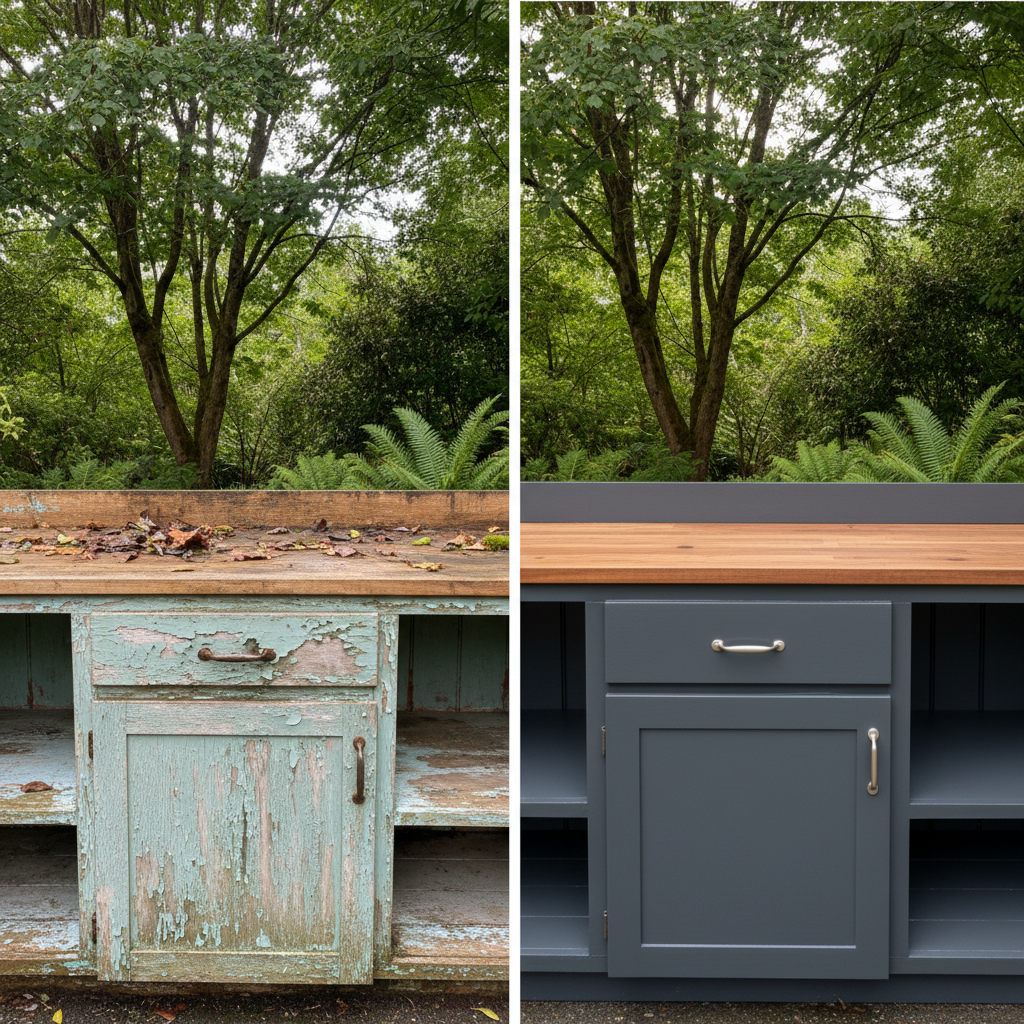
Spraying vs. Brush & Roll: What's the Real Difference?
Alright, let's talk cabinets for a minute. Maybe you're thinking about sprucing up your kitchen, giving those old, tired cabinets a fresh new look without tearing everything out. Good call, by the way; it's a smart way to make a big impact without spending a fortune. When it comes to painting them, you've really got two main options: spraying or the tried-and-true brush and roll method. Both can get the job done, sure, but they're definitely not the same. Knowing the ins and outs of each will save you a lot of grief later on.
I've seen countless kitchens here in Burien, from those cool mid-century homes up on the hill to the newer builds near Seahurst Park, and honestly, the right cabinet finish just makes everything pop. So, let's dig into what you need to know.
The Spray Method: That Factory-Smooth Finish
When we talk about spraying cabinets, we're talking about using specialized gear – usually an airless sprayer or an HVLP (High Volume Low Pressure) sprayer – to put the paint on. This isn't like using a can of spray paint from the hardware store; it's professional equipment that turns the paint into a super fine mist.
Pros of Spraying:
- Appearance: This is the big one, right here. Spraying gives you that incredibly smooth, factory-like finish. No brush strokes, no weird roller texture. If it's done right, you get a truly flawless, glass-like surface.
- Speed (for application): Once all the prep work is done, actually putting the paint on can be pretty quick. You can cover a lot of surface area in a hurry.
- Durability: A properly sprayed finish, especially when you use high-quality, tough cabinet paints, tends to be very durable. The paint goes on evenly and cures into a really hard shell.
Cons of Spraying:
- Prep, Prep, Prep: This is where most of the time goes. You've got to take off all the doors and drawers, clean and sand everything super carefully, and then mask off *every single thing* in your kitchen. Walls, countertops, floors, appliances – if it's not getting painted, it's getting covered. Overspray is no joke, trust me.
- Cost: Because of all that extensive prep work, the specialized equipment, and the skill needed, spraying usually costs more than brushing and rolling.
- Mess & Fumes: Even with all the masking, there's a fine mist in the air, and you absolutely need good ventilation. These paints often have stronger fumes, even the low-VOC ones.
- Touch-ups: If you get a chip or scratch down the road, trying to touch up a sprayed finish with a brush is tough. It'll be hard to match that smooth texture perfectly.
The Brush & Roll Method: The DIY-Friendly Option
This is exactly what it sounds like: using good quality brushes and small foam rollers to apply the paint. Most homeowners are pretty familiar with this method.
Pros of Brush & Roll:
- Cost: It's usually less expensive, whether you're doing it yourself or hiring someone. You need less specialized equipment, and the masking isn't quite as intense.
- Accessibility: You don't necessarily have to take off all your cabinet doors if you're careful. You can often paint them in place, though I generally don't recommend it if you want the best results.
- Touch-ups: Much easier to touch up later on. A small brush can seamlessly blend in a repair.
- Less Mess: While you still need to protect nearby areas, you won't have to worry about that fine mist of overspray.
Cons of Brush & Roll:
- Appearance: You're going to see brush strokes and roller texture. Even with the best technique and self-leveling paints, you just won't get that perfectly smooth, factory finish. Some people don't mind this, but others really dislike it.
- Time (for application): It takes longer to apply the paint by hand, especially if you're doing multiple thin coats for durability.
- Durability: Modern cabinet paints are tough, no doubt, but a hand-painted finish might not always be quite as robust as a professionally sprayed one. It's just harder to get that perfectly even, thin, hard coat by hand.
- Skill: Getting a truly smooth, even finish with a brush and roller still takes skill and patience. Drips and runs are pretty common for amateurs.
My Recommendation for Burien Homeowners
Look, if you're really chasing that high-end, showroom-quality kitchen finish, and your budget can handle it, spraying is absolutely the way to go. The difference in appearance is just undeniable. It looks more professional, more modern, and frankly, more expensive. For many of the homes around Lake Burien, where folks are investing in their property values, spraying is the clear winner.
However, if your budget is tighter, or you're a capable DIYer who doesn't mind a slight texture, then a carefully done brush and roll job can still look fantastic. Just be realistic about the finish you'll get, okay? Don't expect sprayed results from a roller.
No matter which method you pick, the most critical part of cabinet painting isn't how you put the paint on, it's the prep work. Cleaning, degreasing, sanding, priming – this is where 80% of your success comes from. Skip these steps, and your paint job, whether sprayed or brushed, will fail fast. We see it all the time with peeling paint. Here in the Pacific Northwest, with our damp climate, proper adhesion is absolutely key.
At Classic Painting Solutions, we almost always recommend and perform sprayed cabinet finishes for our clients. We honestly believe it offers the best value and the most beautiful, durable result for such a high-traffic area of your home. But we're always happy to chat through your specific project and help you figure out what's best for your budget and your vision.